

Stainless Grade Selection
304 vs 316 Stainless Steel for CNC Machined Parts
Choose 304 for general corrosion resistance where chloride and aggressive chemical exposure are limited. Choose 316/316L when improved chloride and chemical resistance justifies the additional cost. Neither is corrosion-proof; concentration, temperature, crevices, cleaning and surface condition still control performance.
Direct Comparison
| Decision factor | 304/304L | 316/316L |
|---|---|---|
| General industrial corrosion | Often sufficient | May add unnecessary cost |
| Chloride exposure | Higher pitting concern | Often preferred, not immune |
| Material price | Generally lower | Generally higher |
| Machining | Work-hardening controls required | Similar with grade-specific tuning |
| Low-carbon variant | 304L for specified welding/service needs | 316L for specified welding/service needs |
Choose From the Environment
Provide chloride concentration, fluid, temperature, cleaning agents, stagnation, crevices and expected life. “Marine” or “chemical” alone is not enough for grade approval.
Machining and Finishing
Both grades can work harden and create burrs. Passivation, polishing or electropolishing may support cleanliness and surface condition but cannot make the wrong alloy suitable.
Medical/Food Boundary
A 316L callout does not automatically establish implant, biocompatible or food-contact compliance. Exact material standard, source, processing and device validation are required.
Specify L Grade Deliberately
Do not substitute 304, 304L, 316 and 316L without approval. State exact grade, product form, material standard and MTC requirement.
What Our Project Review Resolves Before Quoting 304 vs 316 Stainless Steel for CNC Machined Parts
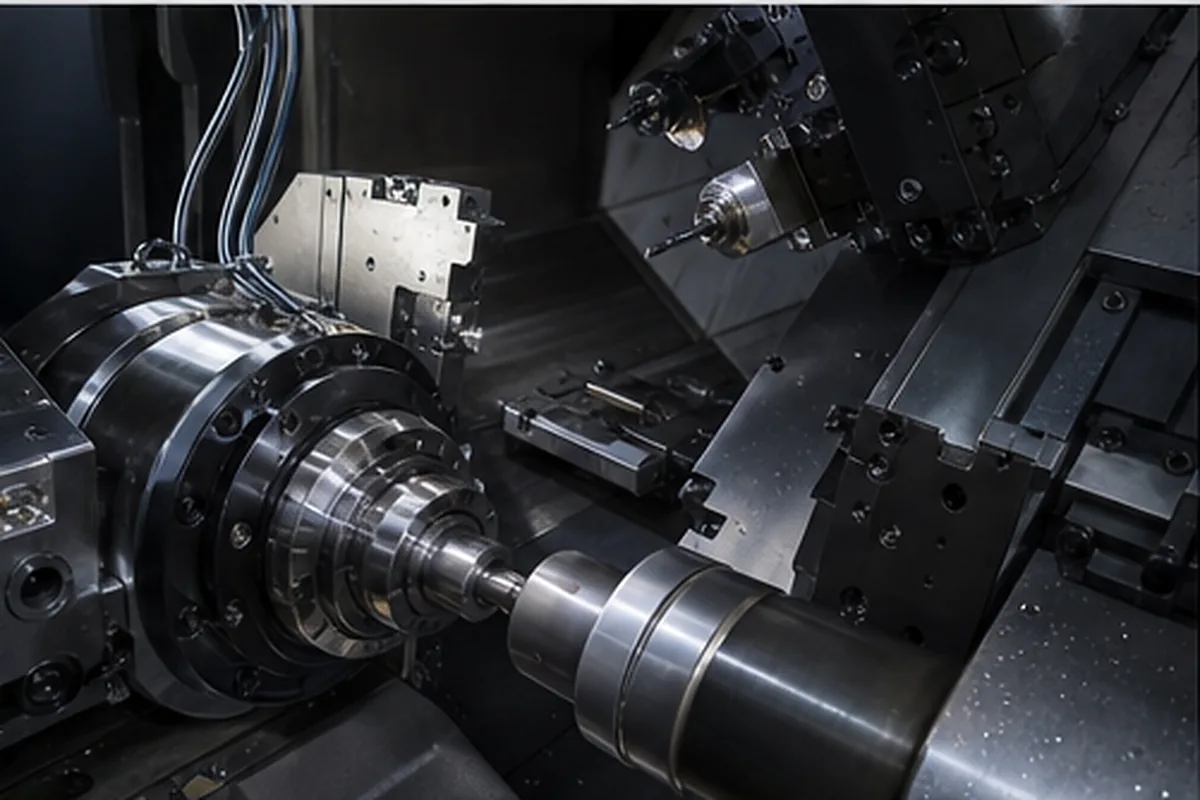
When stainless parts can combine work hardening, tool wear, burrs, heat and surface-finish requirements, an unstable cutting or deburring route can move critical sizes and leave assembly or cleanliness problems. For 304 vs 316 Stainless Steel for CNC Machined Parts, our engineering and quotation review reviews grade and condition, keeps tools engaged with a controlled sequence, plans burr access, and separates machining, specified heat treatment and passivation stages, including the governing standard, masking and final dimensional acceptance. This helps reduce rework, approval delays and avoidable purchasing cost without turning a screening assumption into a capability guarantee.
For the 304 vs 316 Stainless Steel for CNC Machined Parts buying decision, we confirm the route only after reviewing the stainless grade and condition, hardness, critical edges and threads, roughness, heat treatment, passivation specification and inspection scope. Any unresolved item is listed as an RFQ clarification so the buyer can compare scope, evidence, price and lead time on the same basis.
Apply 304 vs 316 Stainless Steel for CNC Machined Parts to the Buyer Decision
For 304 vs 316 Stainless Steel for CNC Machined Parts, use the controlling 2D drawing and 3D model to define part number and revision, material and condition, quantity and annual demand, critical tolerances and GD&T, roughness, heat treatment, surface finish, inspection documents, packaging, delivery address and target date. Identify confidentiality restrictions and which DFM changes may be considered for this part.
Price and lead time can be confirmed only after geometry, material availability, programming, workholding, external processes, inspection effort, first-article approval and logistics are reviewed together.
Check the complete RFQ inputs before supplier comparison.