

6061 Aluminum
6061 Aluminum CNC Machining for General-Purpose Precision Parts
6061-T6 is often selected for machined housings, brackets, fixtures, plates and automation components because it combines useful strength, corrosion resistance, availability and finishing options. It is a practical default candidate, but not automatically the best choice for high wear, extreme strength or every corrosive environment.
When 6061 Is a Strong Candidate
- General structural and enclosure parts
- Prototypes that need a production-intent metal
- Parts requiring anodizing or cosmetic finishing
- Fixtures, plates and automation components
- Moderate strength with weight reduction
When to Compare Another Grade
| Requirement | Alternative to evaluate |
|---|---|
| Higher strength-to-weight | 7075, subject to corrosion and cost review |
| Marine/chloride exposure | Suitable 5xxx alloy, stainless steel or other approved material |
| High wear or thread durability | Steel, stainless, inserts or surface treatment |
| High electrical/thermal conductivity | Copper or application-specific aluminum grade |
| Very high temperature | Material selected from actual temperature and load data |
Machining and Distortion
Large pockets, thin walls and asymmetric removal can release stress and affect flatness. Engineering may recommend balanced stock removal, temporary support, revised wall thickness, staged machining or a more stable plate product where the application justifies it.
Finishing 6061
6061 commonly accepts anodizing, hard anodizing, chemical conversion, electroless nickel, painting and powder coating. Exact color, gloss and coating thickness must be specified. Anodizing can change tight holes and threads; masking or pre-compensation should be planned before machining.
Tolerances and Inspection
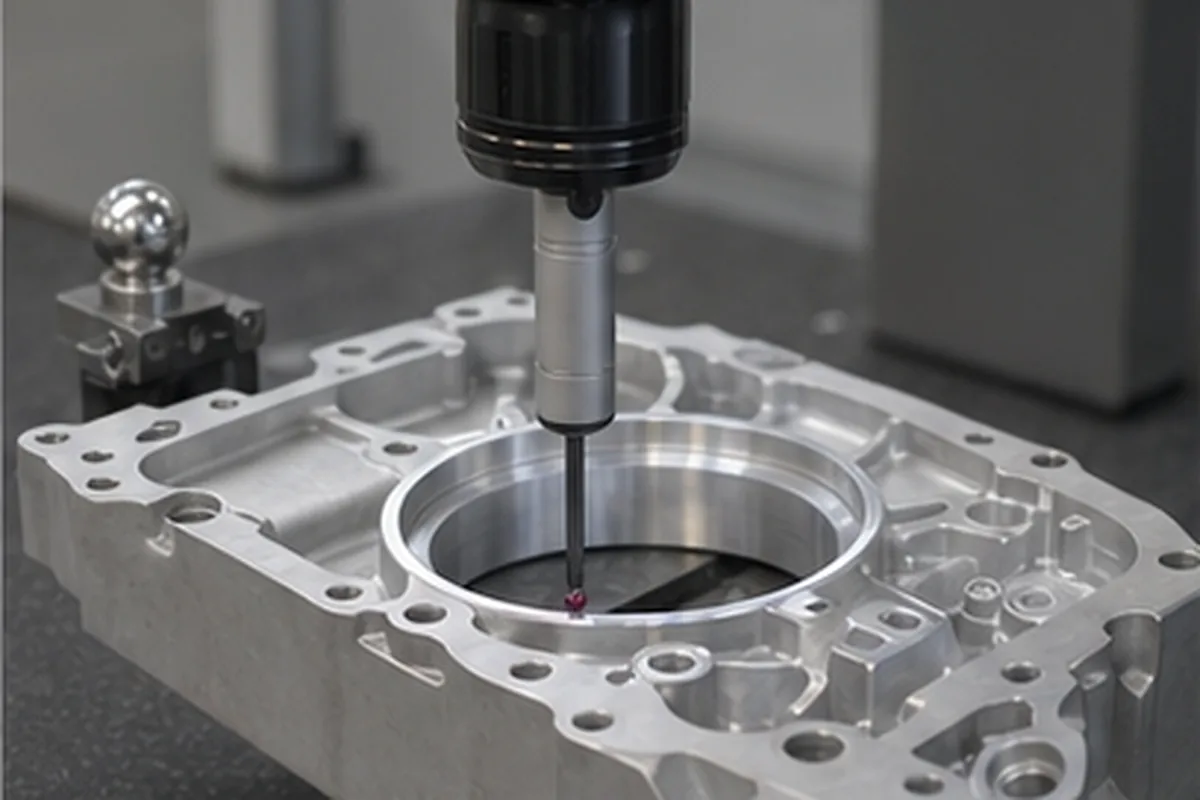
Suitable features may be machined to approximately ±0.05 mm, with qualified dimensions down to approximately ±0.01 mm after geometry and measurement review. Thin sections and large spans may require relaxed tolerances or a controlled inspection condition.
Specify the Material Correctly
State 6061 temper, product form and required material standard. “6061” alone does not define every mechanical property or stock condition. Request a material certificate before ordering when traceability matters.
How We Control the Buyer Risk in 6061 Aluminum CNC Machining for General-Purpose Precision Parts
A useful supplier solution for 6061 Aluminum CNC Machining for General-Purpose Precision Parts starts when light-alloy parts can distort after heavy stock removal and can be marked during machining, finishing or packing. Because scratches, released stress, thin-wall movement and finish variation can delay assembly approval, our project review reviews temper and stock form, balances material removal, controls support and handling, and links anodize or conversion-coating allowance to the critical dimensions. That approach helps the buyer avoid paying for the wrong process and lowers the chance of discovering a critical issue after machining or finishing.
For the 6061 Aluminum CNC Machining for General-Purpose Precision Parts buying decision, our review needs the exact alloy and temper, stock direction, wall and pocket geometry, cosmetic zones, post-finish fits, quantity and inspection condition. We record assumptions, approval points and evidence requirements before the quotation becomes the production baseline.
Review a 6061 Part
Send the model, drawing, quantity, temper, finish and inspection requirements.