

Thread Troubleshooting
Common CNC Thread Problems and How to Prevent Them
Common CNC thread failures include a gauge that will not enter, excessive looseness, insufficient usable depth, damaged first threads, incorrect pitch and coating buildup. Prevention starts with a complete thread callout, correct pre-hole, controlled tool condition, adequate chip removal, defined gauge method and explicit pre- or post-finish acceptance.
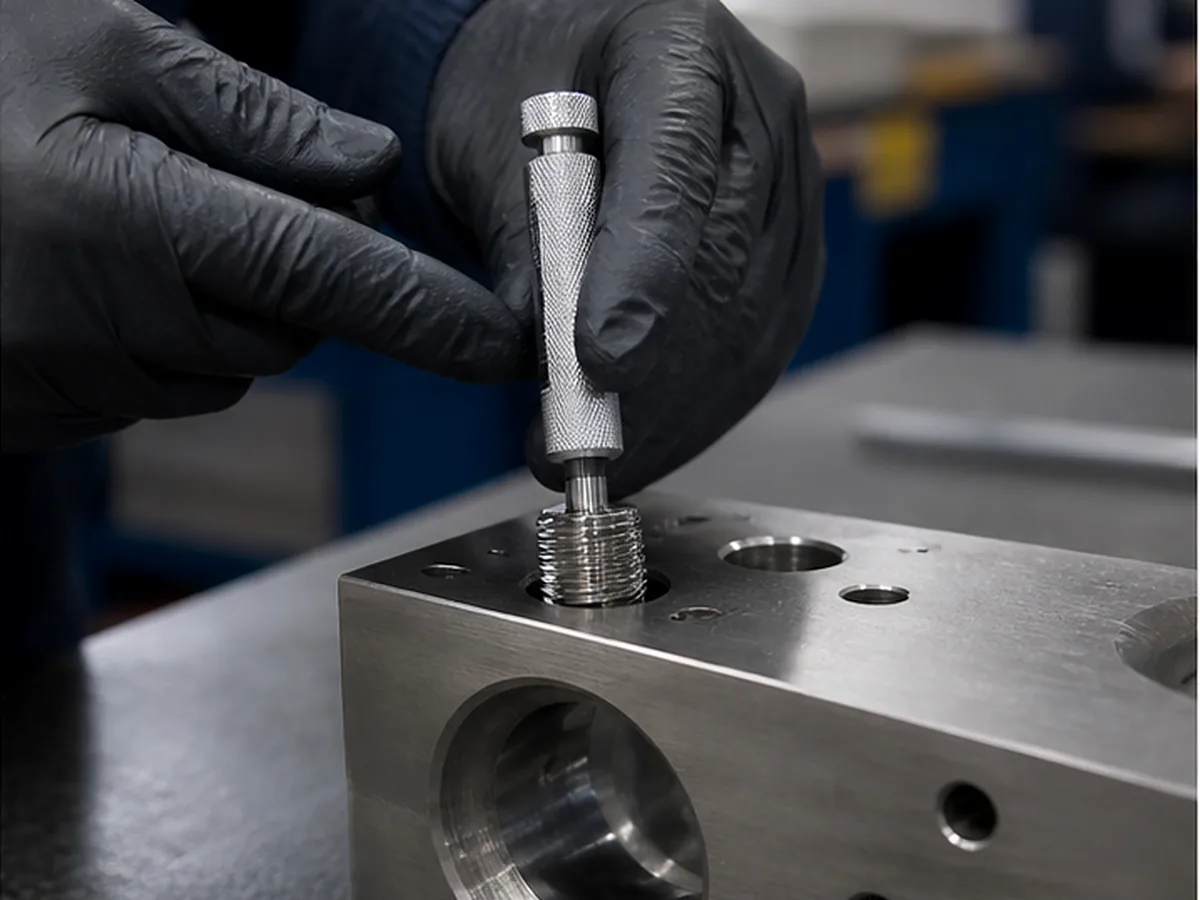
Diagnose the Symptom, Not Just “Thread Failed”
| Symptom | Likely causes | Evidence to collect |
|---|---|---|
| GO gauge will not enter | Undersize thread, burrs, chips or coating | Pre-hole, pre/post-finish gauge results |
| NO-GO gauge enters too far | Oversize thread or worn/incorrect tool | Gauge standard and tool-life record |
| Bolt starts then binds | Damage, pitch mismatch, misalignment or debris | Mating fastener specification and visual check |
| Usable depth is short | Tap lead, bottom clearance or packed chips | Full-depth and drill-depth definition |
| First thread is damaged | Poor chamfer, cross-threading or rough deburring | Entrance geometry and handling review |
| Thread strips under load | Material, engagement or fit problem | Design load and engagement calculation |
A Complete Thread Callout Must Remove Guesswork
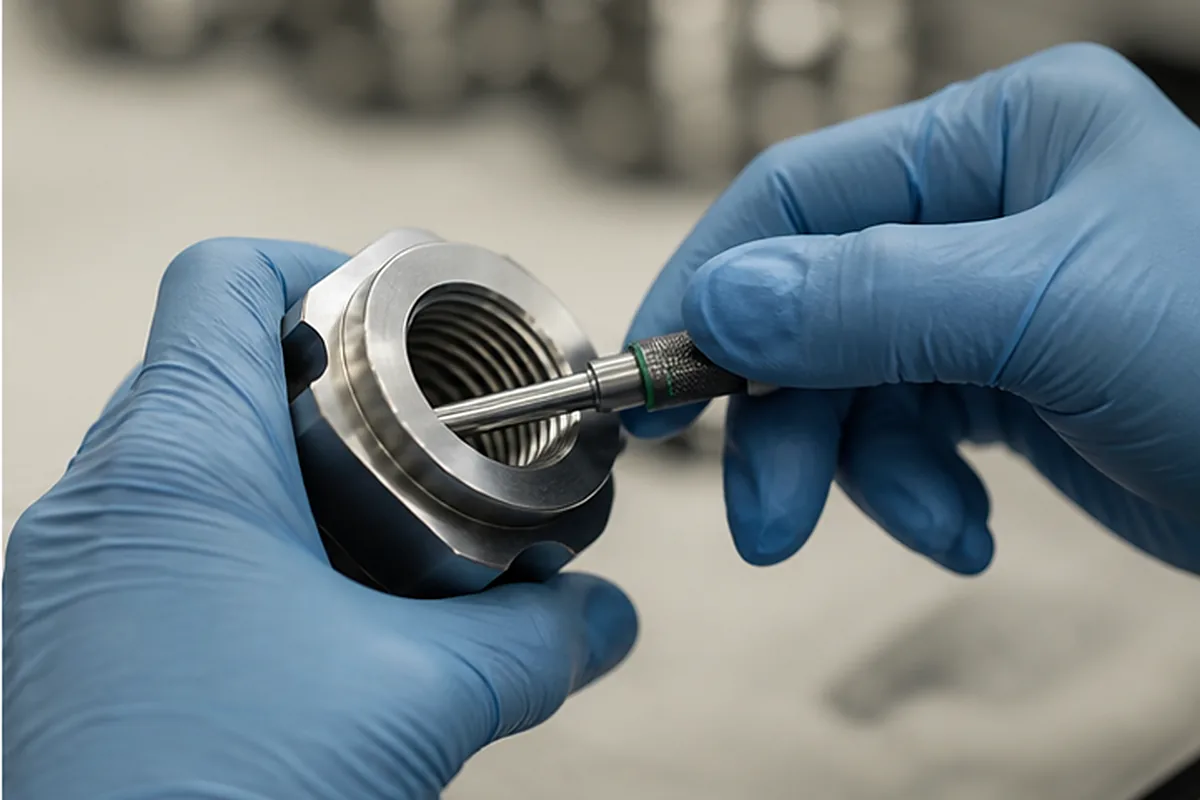
State thread system, nominal diameter, pitch or threads per inch, class/fit, handedness, through or blind condition and minimum usable thread depth. Identify inserts, locking features and gauge requirements. Drill depth is not the same as full thread depth because tool lead and bottom clearance consume space.
Production Factors
- Incorrect tap drill or bore diameter
- Worn tap, thread mill or insert
- Runout or alignment error
- Poor lubrication or chip evacuation
- Material work hardening or built-up edge
- Insufficient entrance chamfer
- Aggressive deburring that removes functional threads
Finishing Changes the Thread
Anodizing, plating, paint and conversion coatings can affect fit. Define whether threads are masked, compensated, chased or inspected after finish. Any post-finish thread restoration must be reviewed because it can remove protective coating and change corrosion performance.
Gauge and Mating-Part Checks
Record the gauge standard, class, identification and calibration status. A commercial bolt is useful for assembly confirmation but does not replace the specified acceptance gauge. If the buyer’s fastener fails while the gauge passes, verify fastener conformity, coating, alignment and engagement before assigning cause.
Can a Failed Thread Be Repaired?
Chasing may remove a small burr or coating but can alter fit. Inserts, oversize repair threads or local re-machining change the design and require buyer approval. Repair is unsuitable when remaining wall, edge distance, load path, material condition or traceability cannot support the approved method.
How We Control the Buyer Risk in Common CNC Thread Problems and How to Prevent Them
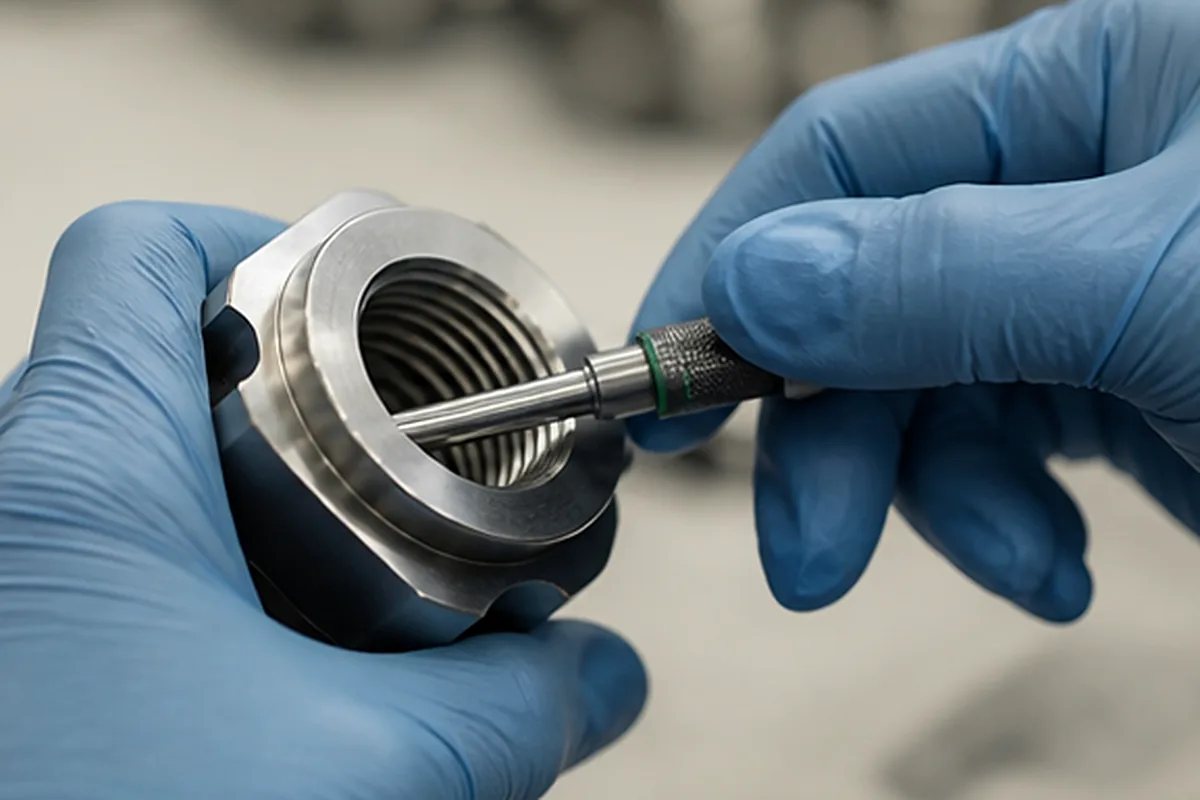
When threads, gears or splines can fail functional gauges even when a nominal CAD shape looks correct, wrong class, usable depth, burr control or coating allowance can stop assembly and cause rework. For Common CNC Thread Problems and How to Prevent Them, our engineering and quotation review confirms the governing standard, class, datum, tool runout, relief, gauge method and pre- versus post-finish acceptance condition. This helps reduce rework, approval delays and avoidable purchasing cost without turning a screening assumption into a capability guarantee.
For the Common CNC Thread Problems and How to Prevent Them buying decision, we confirm the route only after reviewing the full callout, mating-part requirement, usable depth, gauge or inspection method, heat treatment, coating and quantity. Any unresolved item is listed as an RFQ clarification so the buyer can compare scope, evidence, price and lead time on the same basis.
Confirm the Process for Common CNC Thread Problems and How to Prevent Them
For Common CNC Thread Problems and How to Prevent Them, submit the 2D drawing and 3D model with matching revision, exact material and condition, quantity and repeat demand. Identify relevant datums, critical tolerances, GD&T, threads, difficult-access geometry, thin walls, roughness, heat treatment and finish requirements.
The route for Common CNC Thread Problems and How to Prevent Them may require multiple setups, dedicated workholding, intermediate inspection or a justified secondary process. Select grinding, EDM, stress relief or post-finish verification only when the geometry and function require it; machine axis count alone does not establish final capability.