

Document Control
CNC Drawing Revision Control: Preventing Wrong-Version Parts
Control CNC revisions by issuing one approved model-and-drawing package, identifying the governing revision on the RFQ and purchase order, recording changes, withdrawing obsolete files and requiring supplier acknowledgement. File names alone are not reliable revision control.
Recommended Control Sequence
- Give the 3D model and 2D drawing the same part number and revision.
- Use a transmittal listing every controlled file.
- Describe changed features and affected inspection characteristics.
- Require written acknowledgement before material or programming release.
- Archive superseded files without leaving them in the production package.
Buyer, Supplier and Design Authority Responsibilities
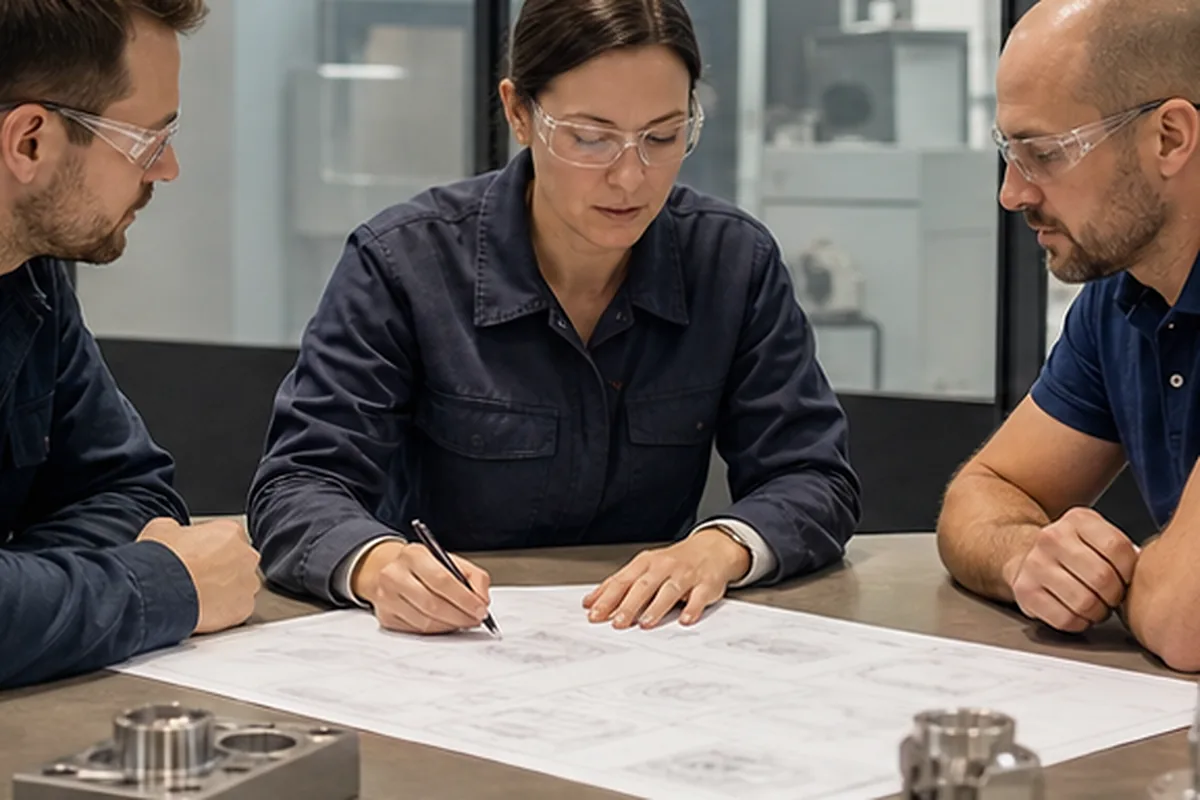
For CNC Drawing Revision Control: Preventing Wrong-Version Parts, the buyer controls the purchase requirement and approval route, the supplier controls the proposed manufacturing and inspection process, and design authority approves departures that affect function. Define responsible names, response times and approval records before work starts.
Common Failure Modes
- Model and drawing carrying different revisions
- Email attachments replacing the approved document system
- A changed note not reflected in inspection planning
- Repeat orders automatically using an old program
Questions to Resolve in Writing
- Which document governs geometry and acceptance?
- Has work started against the previous revision?
- What stock, tooling or parts are affected?
- Does the change trigger new FAI?
Evidence to Retain
Retain the controlled revision, quotation and purchase order, technical questions, approvals, inspection records, certificates, packaging release and shipment identity. The evidence depth should match part risk and contractual requirements.
From CNC Drawing Revision Control: Preventing Wrong-Version Parts Requirements to a Controlled Manufacturing Plan
The purchasing issue behind CNC Drawing Revision Control: Preventing Wrong-Version Parts is that the buyer needs a supplier response tied to the actual part rather than a generic capability statement; as a result, a broad promise can leave geometry, material, quality, cost and delivery assumptions unresolved. Our response is to turns the drawing and purchase requirement into documented process, inspection and approval questions before price or production is confirmed. The objective is to protect assembly and validation schedules while reducing preventable scrap, rework and supplier-change risk.
For the CNC Drawing Revision Control: Preventing Wrong-Version Parts buying decision, before we confirm price or delivery, the buyer should send the controlled drawing and model, material, quantities, critical requirements, finish, quality documents, target date, destination and confidentiality needs. If a requirement cannot yet be verified, we keep it as an open condition instead of presenting it as a guaranteed result.
DFM Risk, Consequence and Approval Boundary
The core risk is manufacturing from a superseded drawing, model or specification after a design change. The consequence can be wrong material, missing features, obsolete tolerances or unusable inspection records. Identify the controlling revision on the purchase order, reconcile the 2D drawing with the 3D model and quarantine superseded files. No supplier should infer functional changes; conflicts require written buyer disposition.