

Billet vs Near-Net Casting
CNC Machining vs Investment Casting for Complex Metal Parts
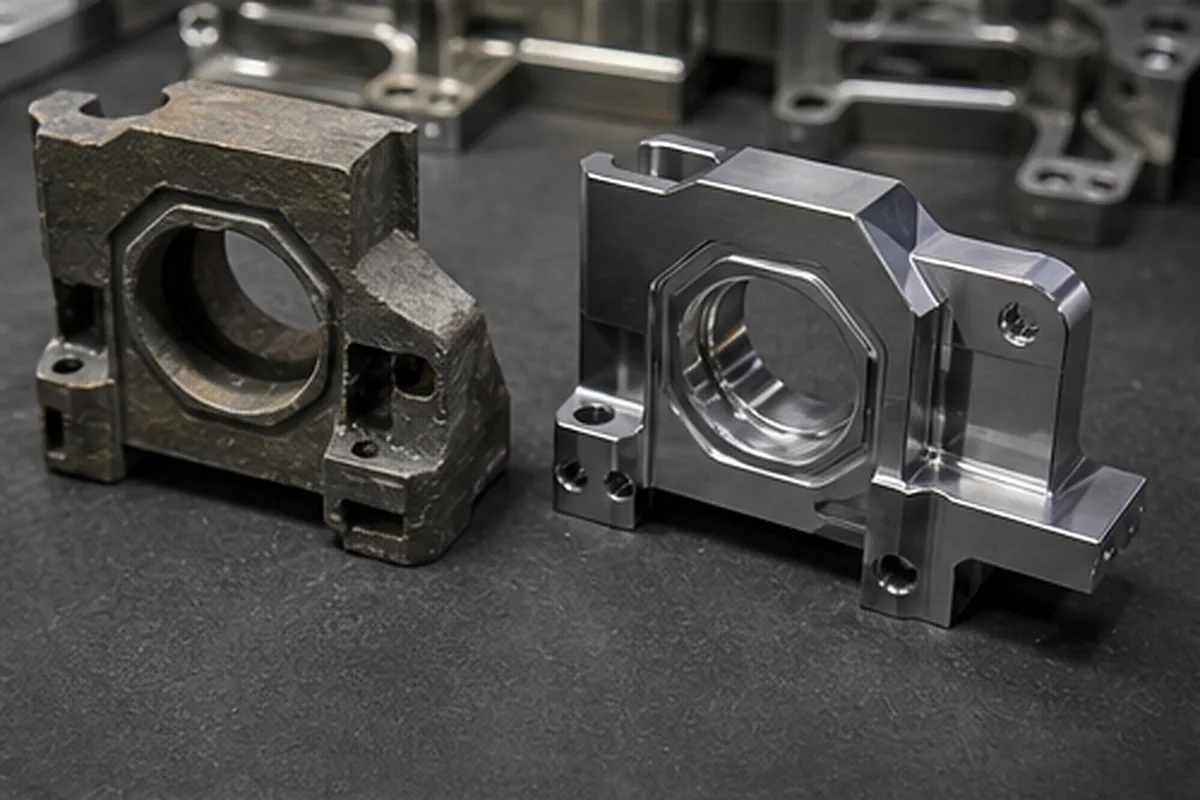
Choose CNC machining for low volume, controlled wrought material and geometry accessible to tools. Choose investment casting for complex near-net metal shapes and higher quantities where tooling and casting qualification are justified. Critical cast surfaces may still require finish machining.
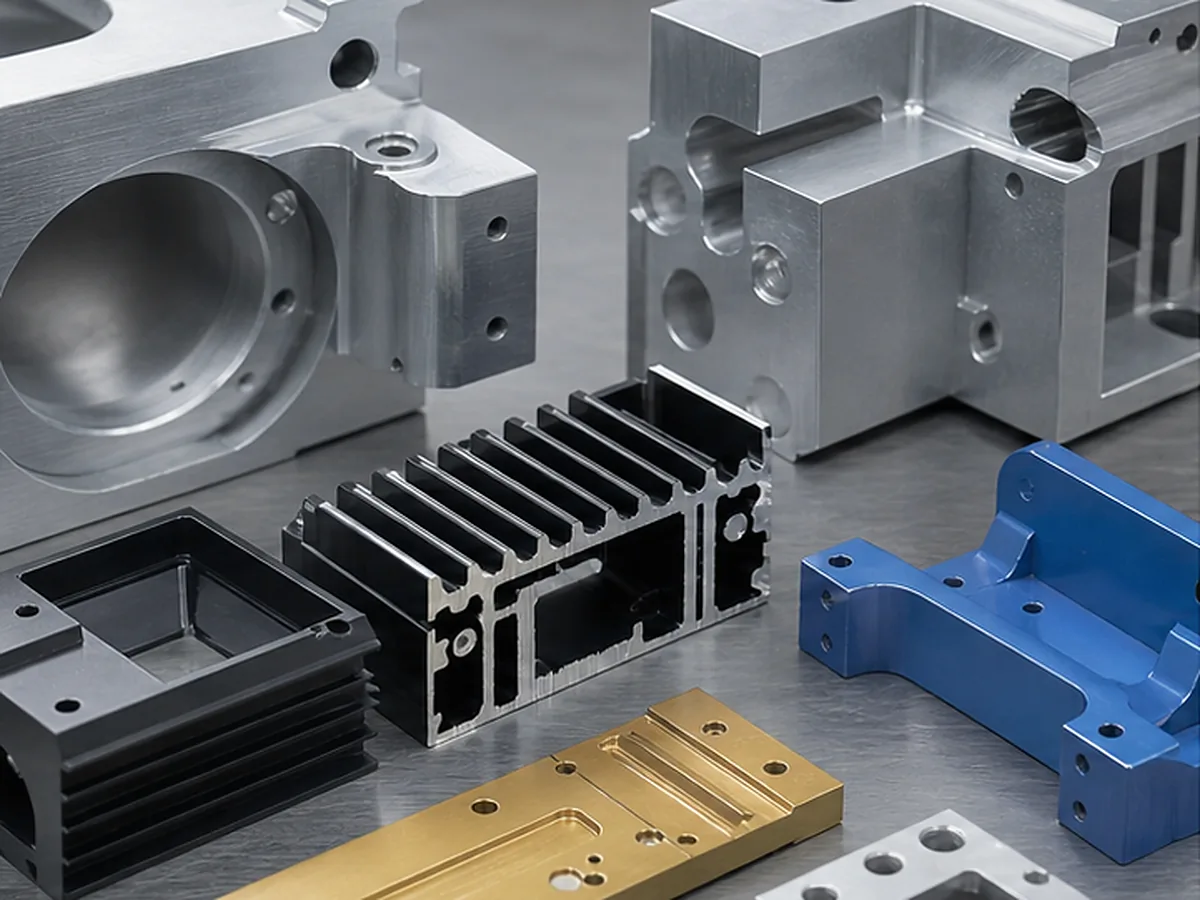
Direct Comparison
| Factor | CNC machining | Investment casting |
|---|---|---|
| Upfront tooling | Low | Pattern/tooling and qualification required |
| Internal/complex form | Limited by access | Supports complex near-net geometry |
| Material form | Wrought/billet stock | Cast microstructure and defect controls |
| Lead time/change | Faster and easier to revise | Longer process and costly changes |
| Critical tolerance | Machined directly | Machine selected datums and interfaces |
When CNC Is Preferable
- Prototype or low-volume requirement
- Design is still changing
- Wrought material properties are required
- Geometry has direct tool access
- Tight dimensions dominate the complete part
When Investment Casting May Win
Complex three-dimensional shapes, difficult-to-machine alloys and high material-removal ratios can justify casting when volume and design stability support tooling and process qualification.
Casting Risks to Define
Shrinkage, porosity, inclusions, surface, minimum section, heat treatment, NDT and machining allowance must be controlled by specification. A dimensionally machined casting is not automatically free of internal defects.
Hybrid Datum Planning
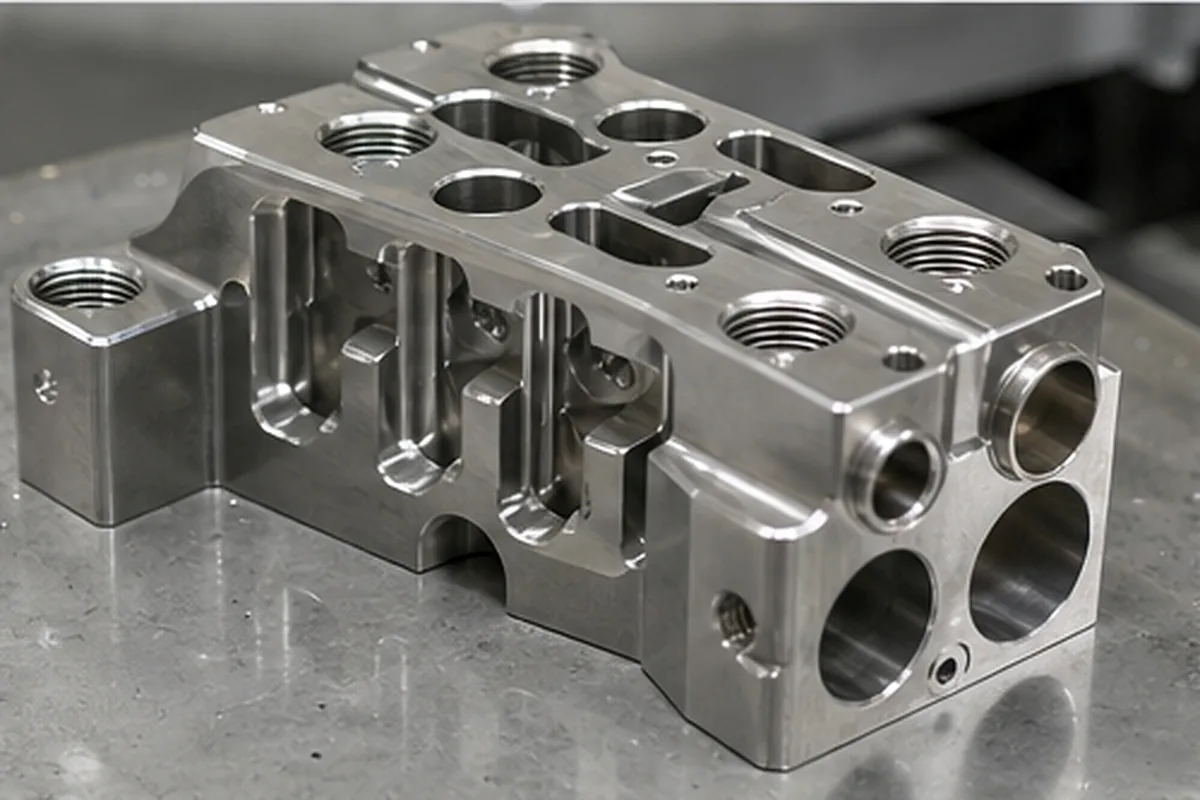
Define casting datums, machining stock and final machined datums together. Poor near-net datum strategy can create insufficient stock or misaligned critical features.
From CNC Machining vs Investment Casting for Complex Metal Parts Requirements to a Controlled Manufacturing Plan
A useful supplier solution for CNC Machining vs Investment Casting for Complex Metal Parts starts when buyers can overpay or lose datum consistency when a process is chosen from a machine label instead of the part geometry. Because unnecessary setups or an unjustified high-end route can add cost without improving the functional result, our project review compares rotational versus prismatic geometry, feature access, datum relationships, workholding, batch size and measurement access before selecting milling, turning or a combined route. That approach helps the buyer avoid paying for the wrong process and lowers the chance of discovering a critical issue after machining or finishing.
For the CNC Machining vs Investment Casting for Complex Metal Parts buying decision, our review needs the 2D drawing and 3D model, overall size, material state, critical datums and tolerances, quantity, finish and inspection documents. We record assumptions, approval points and evidence requirements before the quotation becomes the production baseline.