

Stainless Steel Finishing
Passivation vs Electropolishing for Stainless Steel Parts
Passivation chemically removes free iron and supports formation of the stainless steel’s passive surface with minimal intentional smoothing. Electropolishing electrochemically removes a controlled surface layer, reducing microscopic peaks and changing appearance as well as passivity. Choose from cleanliness, roughness, geometry, corrosion, dimensional and validation requirements—not brightness alone.
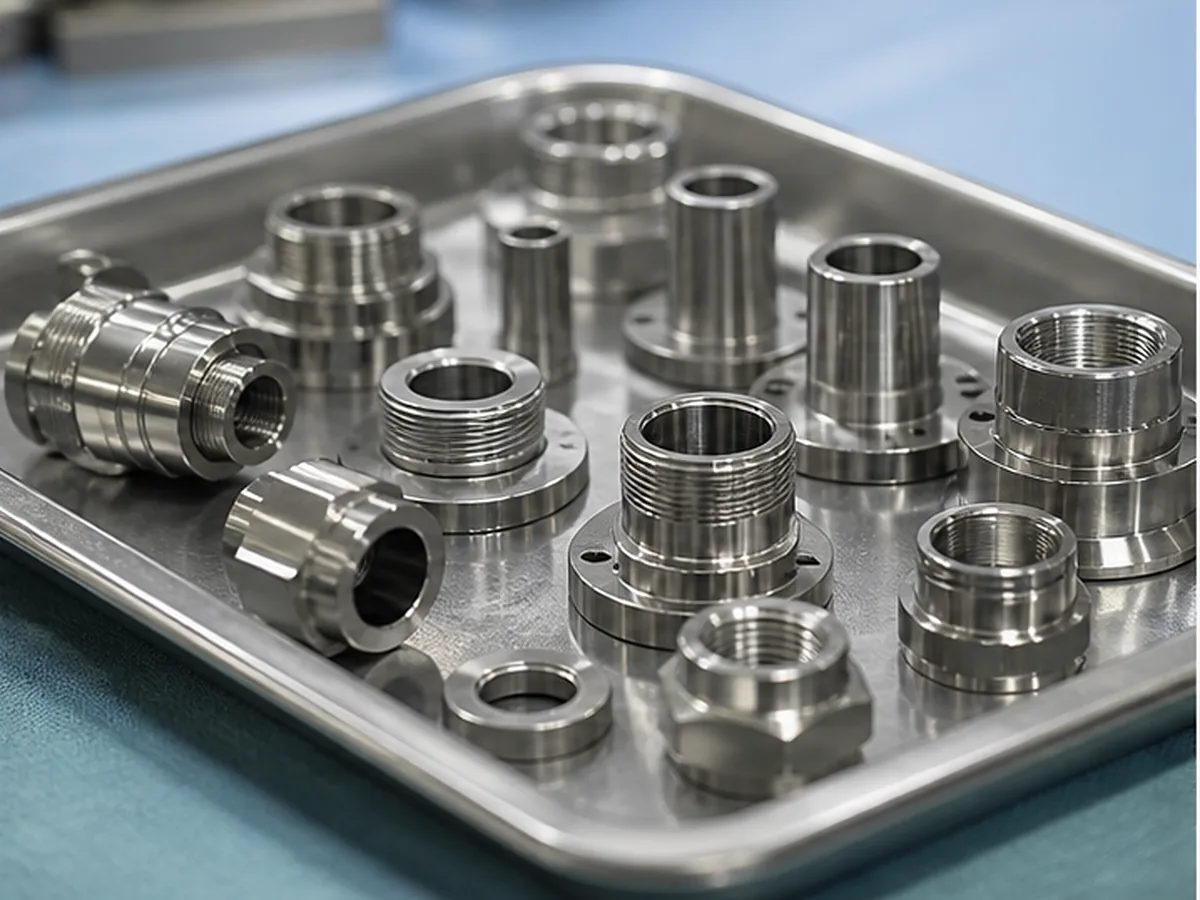
Key Differences
| Factor | Passivation | Electropolishing |
|---|---|---|
| Primary action | Cleaning/free-iron removal and passive-surface support | Controlled electrochemical material removal |
| Surface smoothing | Not a polishing process | Can reduce microscopic peaks |
| Appearance | Generally retains prior texture | Often brighter/smoother but geometry affects result |
| Dimensional effect | Normally limited | Material removal must be considered |
| Pre-finish quality | Does not remove deep defects | Does not automatically erase pits, weld defects or deep scratches |
| Process complexity | Usually simpler | Requires electrical contact, racking and tighter route control |
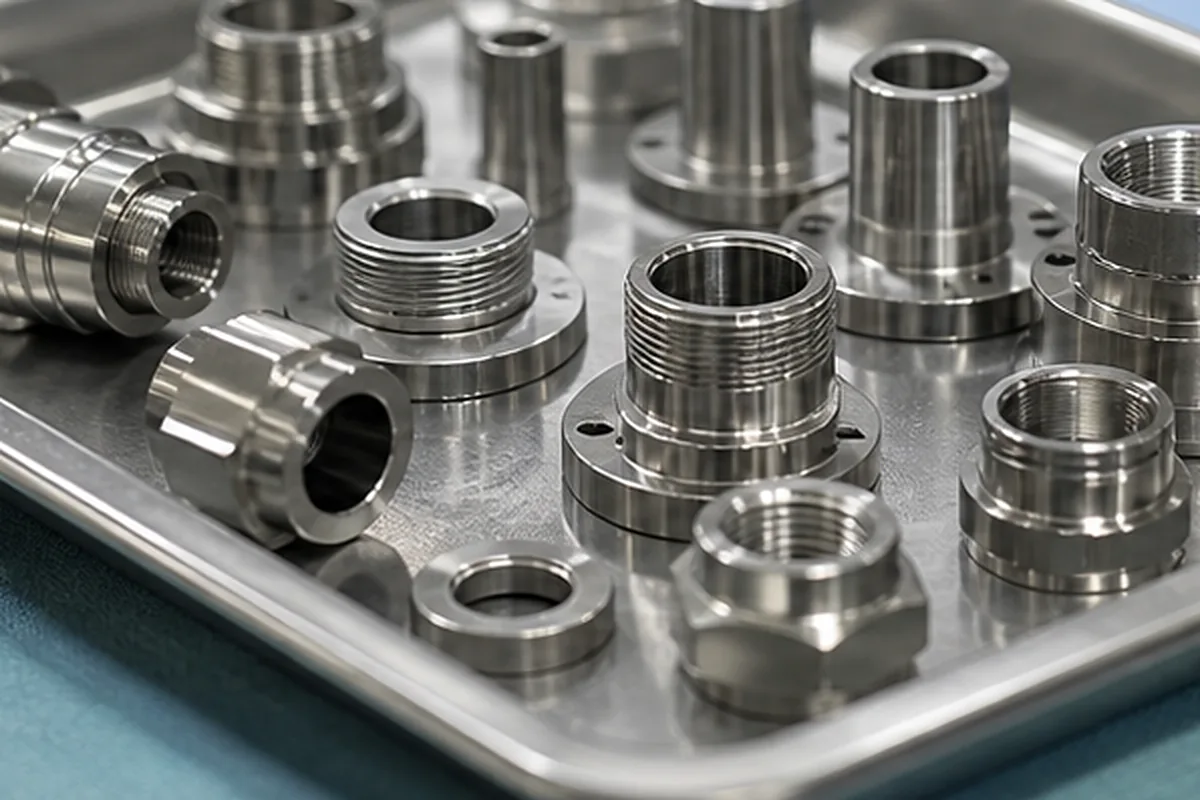
Choose Passivation When
- The machined surface texture is already acceptable.
- Free-iron contamination control is the main concern.
- Minimal dimensional change is important.
- The governing product specification calls for a validated passivation route.
Evaluate Electropolishing When
- Smoother microtopography supports cleaning or fluid service.
- A bright, more uniform finish is functionally or cosmetically needed.
- Controlled material removal can be tolerated.
- Racking, current distribution and recess access have been reviewed.
Neither Process Replaces Good Manufacturing
Remove embedded contamination, heat tint, scale, deep scratches and burrs using an approved preparation route. Passivation does not repair damaged base material, and electropolishing can reveal rather than hide some defects. Welding and heat-affected areas require specific review.
Define Acceptance
- Specify stainless grade and condition.
- Cite the governing process standard and method.
- Define pre-cleaning and prohibited contamination.
- State roughness before/after where functional.
- Identify critical dimensions and masked/contact areas.
- Specify required tests, certificates and cleanliness packaging.
Formexi Scope Boundary
Passivation support is reviewed by material, drawing and processor route. Electropolishing availability and specification compliance must be confirmed for each project; this comparison is not a blanket capability claim.
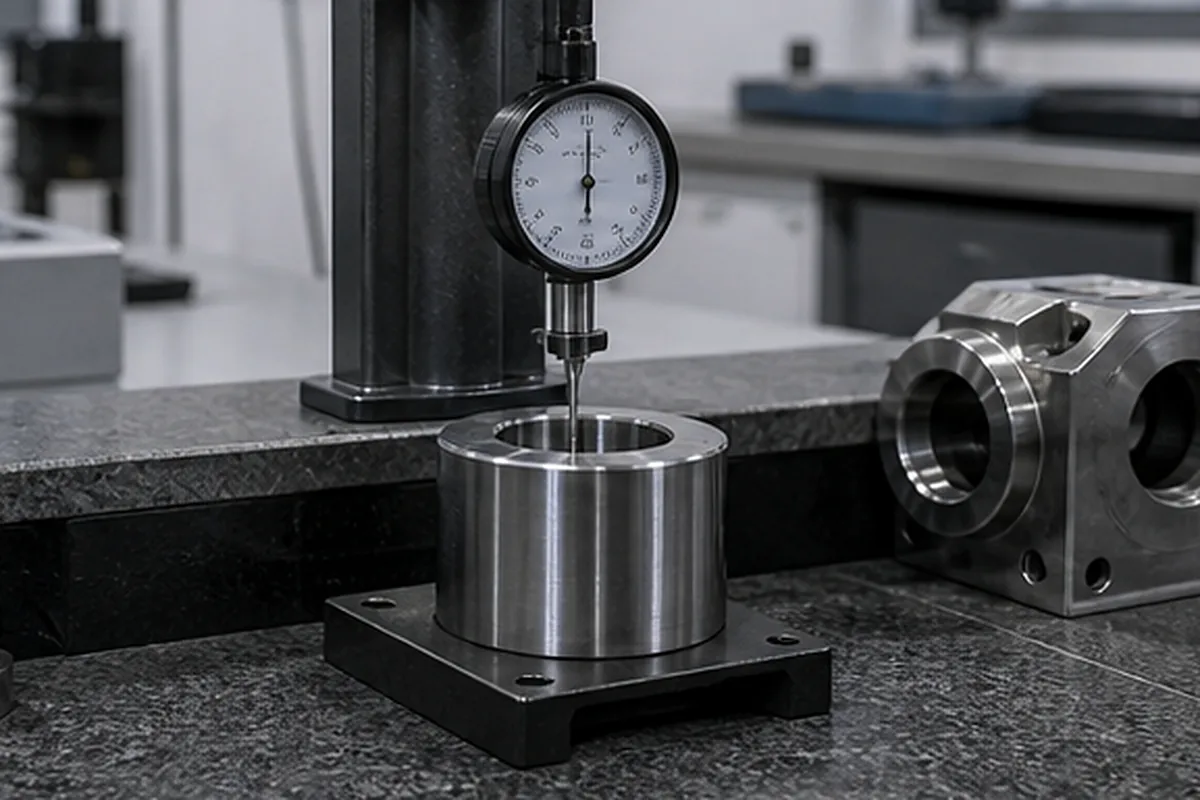
How We Reduce Sourcing and Manufacturing Risk for Passivation vs Electropolishing for Stainless Steel Parts
When a finish can change dimensions, hide burrs, create color variation or damage cosmetic and sealing surfaces, late finish decisions can turn acceptable machined parts into rejected final parts. For Passivation vs Electropolishing for Stainless Steel Parts, our engineering and quotation review coordinates machining allowance, pretreatment, masking, rack-contact location, thread and fit protection, handling and post-process inspection as one route. This helps reduce rework, approval delays and avoidable purchasing cost without turning a screening assumption into a capability guarantee.
For the Passivation vs Electropolishing for Stainless Steel Parts buying decision, we confirm the route only after reviewing base material, process type/class, thickness, color or texture sample, masks, critical post-finish dimensions, tests and packaging. Any unresolved item is listed as an RFQ clarification so the buyer can compare scope, evidence, price and lead time on the same basis.