

Design for Cost
How to Reduce CNC Machining Cost Without Reducing Function
Reduce CNC cost by removing nonfunctional complexity: fewer setups, accessible features, larger radii, practical tolerances, available materials and planned finishing. Do not reduce cost by weakening critical interfaces or removing required inspection. The best savings come before production, while geometry can still change.
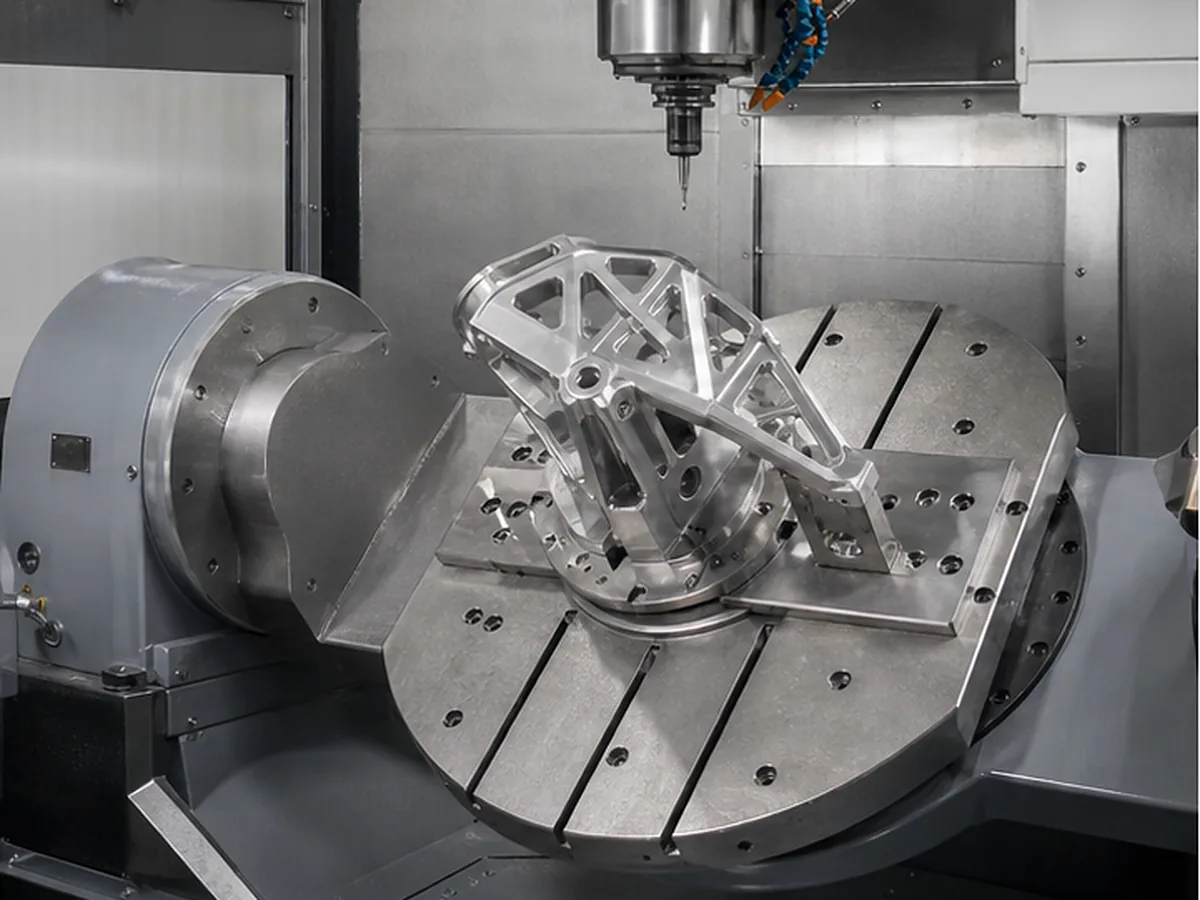
Main CNC Cost Drivers
| Driver | Why it changes price | Possible action |
|---|---|---|
| Setup count | Programming, fixtures, handling and datum risk | Align features or use a justified multi-axis route |
| Tool reach | Long tools require slower cutting | Reduce depth and enlarge radii |
| Tolerance | Process and inspection effort | Tighten only functional dimensions |
| Material removal | Stock cost and cycle time | Use efficient stock or near-net route where justified |
| Finish | External lead time, masking and reinspection | Use as-machined where function allows |
| Quantity | Setup amortization and fixture economics | Compare realistic batch sizes and revision risk |
High-Value Design Changes
- Increase internal corner radii.
- Replace deep pockets with stepped or open geometry.
- Use standard hole, thread and stock sizes.
- Remove tight tolerances from cosmetic/nonmating features.
- Identify only necessary cosmetic surfaces.
- Combine parts only when it reduces total assembly/process cost.
Quantity and Unit Price
Larger quantities spread setup cost but create inventory, cash and revision exposure. Request prices for realistic break quantities and annual demand rather than assuming the largest batch is automatically cheapest overall.
Material Price Is Only One Component
A cheaper material may machine slowly, distort, need coating or have poor yield. Compare stock, machining, finish, inspection, scrap and service life together.
Do Not Remove Necessary Quality
Reducing full inspection to sampling may save cost only when process stability and risk permit it. Safety, fit, traceability and regulatory requirements take priority over price reduction.
From How to Reduce CNC Machining Cost Without Reducing Function Requirements to a Controlled Manufacturing Plan
When buyers can overpay or lose datum consistency when a process is chosen from a machine label instead of the part geometry, unnecessary setups or an unjustified high-end route can add cost without improving the functional result. For How to Reduce CNC Machining Cost Without Reducing Function, our engineering and quotation review compares rotational versus prismatic geometry, feature access, datum relationships, workholding, batch size and measurement access before selecting milling, turning or a combined route. This helps reduce rework, approval delays and avoidable purchasing cost without turning a screening assumption into a capability guarantee.
For the How to Reduce CNC Machining Cost Without Reducing Function buying decision, we confirm the route only after reviewing the 2D drawing and 3D model, overall size, material state, critical datums and tolerances, quantity, finish and inspection documents. Any unresolved item is listed as an RFQ clarification so the buyer can compare scope, evidence, price and lead time on the same basis.
Confirm the Process for Reduce CNC Machining Cost Without Reducing Function
For Reduce CNC Machining Cost Without Reducing Function, submit the 2D drawing and 3D model with matching revision, exact material and condition, quantity and repeat demand. Identify relevant datums, critical tolerances, GD&T, threads, difficult-access geometry, thin walls, roughness, heat treatment and finish requirements.
The route for Reduce CNC Machining Cost Without Reducing Function may require multiple setups, dedicated workholding, intermediate inspection or a justified secondary process. Select grinding, EDM, stress relief or post-finish verification only when the geometry and function require it; machine axis count alone does not establish final capability.