

Billet Machining vs Fabrication
CNC Machining vs Sheet Metal Fabrication
Choose sheet metal for thin, constant-thickness enclosures, panels and brackets formed from cut/bent stock. Choose CNC machining for thick sections, deep pockets, precision bores, complex local geometry and interfaces requiring material removal. Many assemblies combine both.
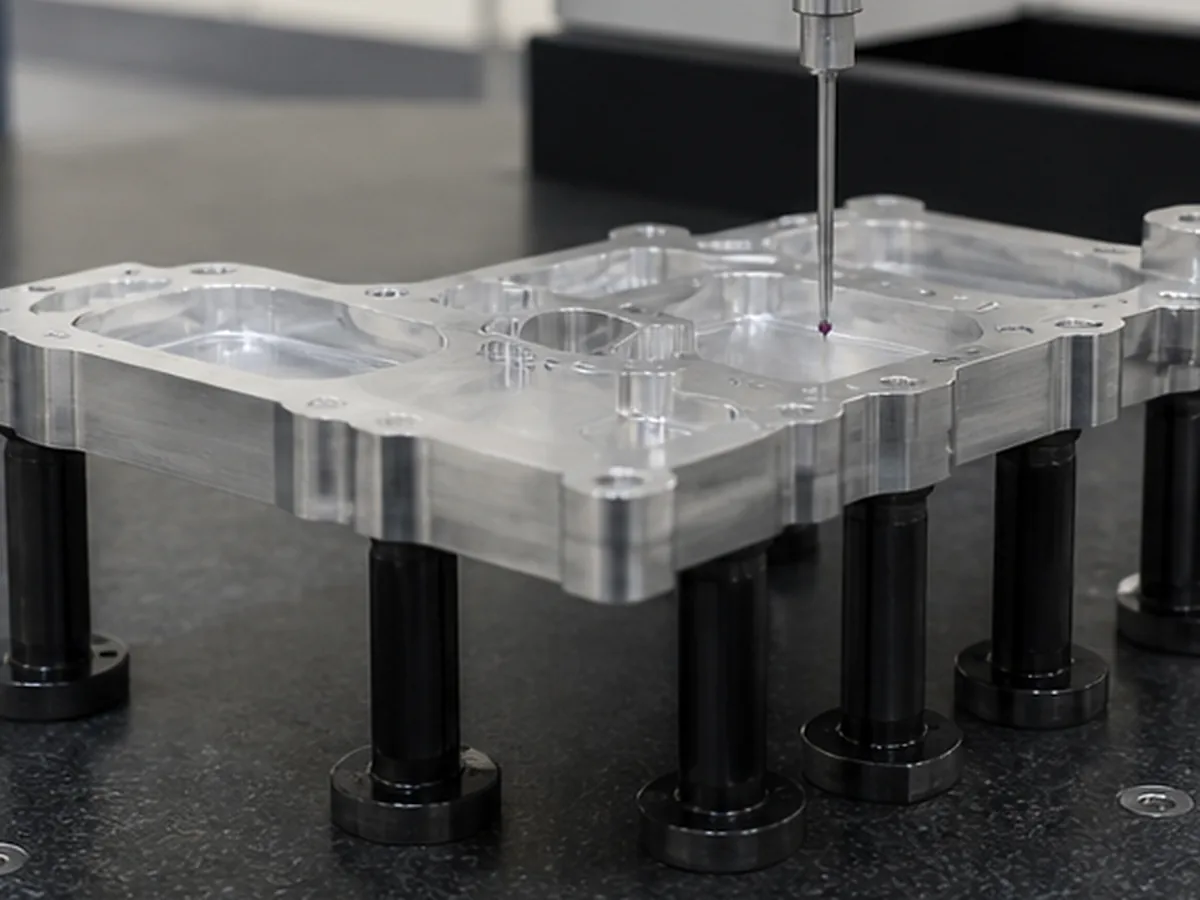
Direct Comparison
| Factor | CNC machining | Sheet metal |
|---|---|---|
| Geometry | 3D solid features, pockets and precision interfaces | Constant-thickness cut and bent forms |
| Material use | Can create significant chips | Efficient for thin shells and panels |
| Tooling | Programming/fixtures | Bending tools; special tooling for some forms |
| Precision local features | Strong on machined interfaces | Bend and fabrication tolerances affect relationships |
| Assembly | Can consolidate parts | Often uses welds, fasteners or inserts |
Use Sheet Metal When
- Walls are uniform sheet thickness.
- Geometry can be cut and bent with practical radii.
- Large panels would waste billet material.
- Welded or fastened construction is acceptable.
Use CNC When
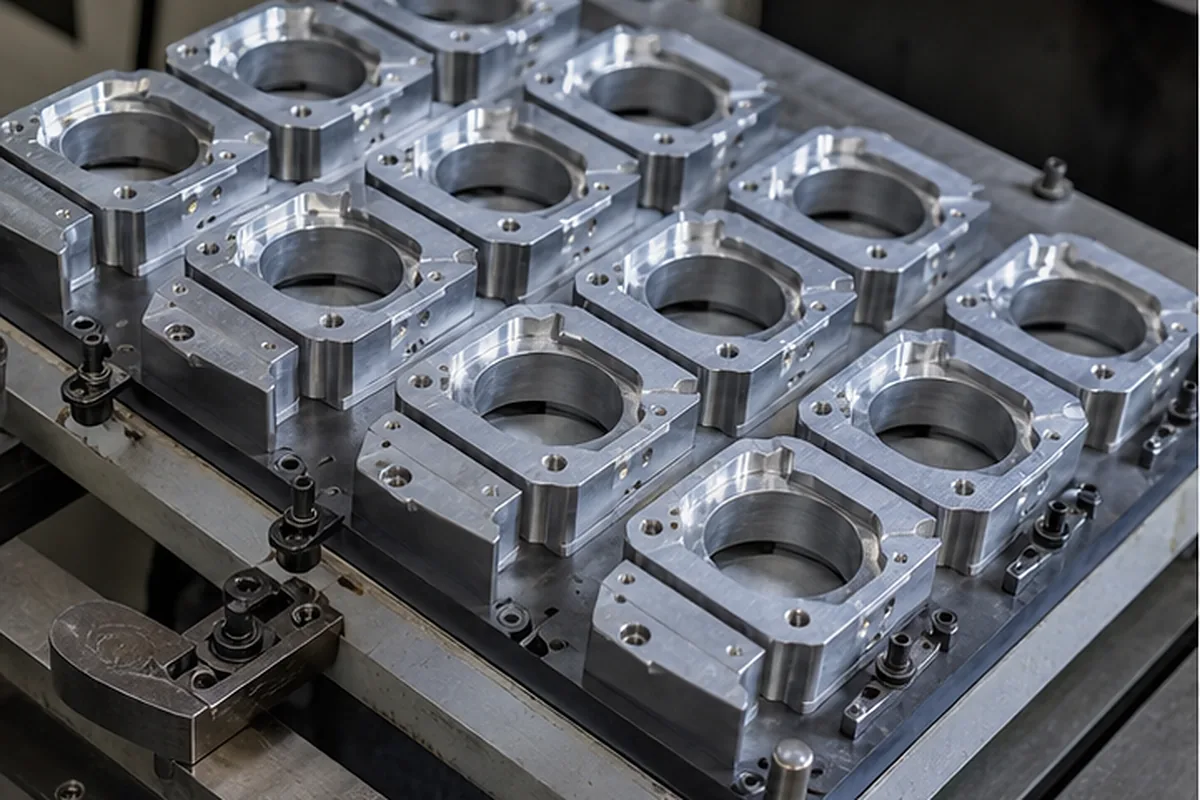
- Critical bores, pockets, flatness or sealing faces dominate.
- Thick local sections and integrated bosses are needed.
- Weld distortion or bend tolerance is unacceptable.
- Low-volume solid construction reduces assembly risk.
Hybrid Design
Use a sheet-metal enclosure with machined heat sinks, connector blocks, mounting rails or precision inserts. Define assembly datums and coating sequence across both processes.
Cost Comparison
Compare material yield, cutting, bending, welding, machining, inserts, finishing, inspection and assembly—not only the price of one fabricated component.
What Our Project Review Resolves Before Quoting CNC Machining vs Sheet Metal Fabrication
The purchasing issue behind CNC Machining vs Sheet Metal Fabrication is that buyers can overpay or lose datum consistency when a process is chosen from a machine label instead of the part geometry; as a result, unnecessary setups or an unjustified high-end route can add cost without improving the functional result. Our response is to compares rotational versus prismatic geometry, feature access, datum relationships, workholding, batch size and measurement access before selecting milling, turning or a combined route. The objective is to protect assembly and validation schedules while reducing preventable scrap, rework and supplier-change risk.
For the CNC Machining vs Sheet Metal Fabrication buying decision, before we confirm price or delivery, the buyer should send the 2D drawing and 3D model, overall size, material state, critical datums and tolerances, quantity, finish and inspection documents. If a requirement cannot yet be verified, we keep it as an open condition instead of presenting it as a guaranteed result.
Confirm the Process for CNC Machining vs Sheet Metal Fabrication
For CNC Machining vs Sheet Metal Fabrication, submit the 2D drawing and 3D model with matching revision, exact material and condition, quantity and repeat demand. Identify relevant datums, critical tolerances, GD&T, threads, difficult-access geometry, thin walls, roughness, heat treatment and finish requirements.
The route for CNC Machining vs Sheet Metal Fabrication may require multiple setups, dedicated workholding, intermediate inspection or a justified secondary process. Select grinding, EDM, stress relief or post-finish verification only when the geometry and function require it; machine axis count alone does not establish final capability.